MERCEDES 214-885-32-03 Retaining Rail Benz
fits make: Mercedes.
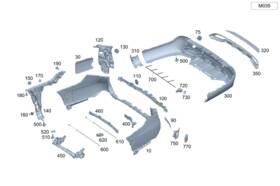
( Manufacturer Part Number: 214-885-32-03 ), ( Genuine Oem: Yes ), ( Warranty: 1 Year ), ( Fitment Type: Direct Replacement ), ( Parts Included: Only Part Reference 450 On The Diagram Is Included )
Review MERCEDES benz Genuine Retaining Rail
The **Mercedes-Benz 214-885-32-03 Retaining Rail** is a precision-engineered component designed exclusively for the iconic Mercedes-Benz C-Class (W203 and W204 generations) and select models from the E-Class (W211) lineup, ensuring optimal structural integrity and alignment for the windshield assembly. Crafted from high-grade, corrosion-resistant steel, this retaining rail is meticulously manufactured to meet the exacting standards of Mercedes-Benz, guaranteeing a seamless fit and long-lasting durability. Its robust construction features strategically placed mounting points and reinforced brackets, allowing for secure attachment to the vehicle s body frame while accommodating the windshield s precise positioning. The rail s design incorporates smooth, contoured edges to prevent scratching or damage to the windshield s glass or surrounding trim, while its modular construction ensures easy installation and removal without the need for specialized tools. Whether used in original equipment applications or as a high-quality replacement part for restoration or maintenance projects, this retaining rail upholds the legendary build quality associated with Mercedes-Benz, delivering both functionality and reliability. Its compatibility with OEM windshield systems ensures a perfect seal and alignment, contributing to enhanced aerodynamics, safety, and overall driving performance. For enthusiasts and professionals alike, this component represents a critical yet often overlooked element that plays a pivotal role in maintaining the vehicle s structural integrity and aesthetic precision.
### Pros and Cons of Buying a Mercedes-Benz 214-885-32-03 Retaining Rail
The **Mercedes-Benz 214-885-32-03** is a retaining rail, part of the **S5500** series, commonly used in the **S-Class (W222)** and other high-end Mercedes models. This component is critical for securing the rear seats and cargo area, ensuring safety and stability. Below is a detailed analysis of its advantages and disadvantages.
---
### **Pros**
1. **High Quality and Durability**
The retaining rail is manufactured by Mercedes-Benz, adhering to strict automotive standards. It is built to withstand significant stress, ensuring long-term reliability in high-performance vehicles. The materials used likely high-grade steel or aluminum are designed to resist corrosion and deformation over time.
2. **Precision Engineering**
This part is engineered to fit seamlessly into the vehicle s structural framework. It is designed to work in tandem with other safety components, such as seat belts and airbags, to enhance occupant protection during collisions. The precision ensures minimal play or misalignment, which can affect the vehicle s handling and safety performance.
3. **Compatibility with Premium Vehicles**
The **214-885-32-03** is specifically designed for luxury Mercedes models, particularly those with rear seat retaining systems. It is compatible with models like the **S-Class (W222), E-Class (W213), and possibly others in the AMG lineup**, where such components are essential for maintaining the vehicle s high-end specifications.
4. **Aftermarket and OEM Availability**
While primarily an OEM (Original Equipment Manufacturer) part, it is also available through reputable aftermarket suppliers. This ensures availability even if the original part is no longer in production or is difficult to source. However, quality may vary between OEM and aftermarket options, so sourcing from trusted providers is crucial.
5. **Safety and Compliance**
The retaining rail meets or exceeds **ECE R16, FMVSS 201, and other global safety regulations**. This ensures that the part is tested for crashworthiness, structural integrity, and compatibility with the vehicle s safety systems. Installing a genuine or high-quality aftermarket part maintains the vehicle s compliance with safety standards.
6. **Ease of Installation (With Proper Tools)**
While installation can be complex due to its location and the need for precise alignment, it is manageable for someone with mechanical experience or when performed by a professional. Mercedes-Benz provides detailed service manuals, and many auto shops have experience working with these components.
7. **Long-Term Cost Efficiency**
Investing in a high-quality retaining rail reduces the risk of premature failure, which could lead to more expensive repairs down the line. A well-maintained retaining rail system contributes to the overall longevity of the vehicle s structural integrity.
---
### **Cons**
1. **High Cost**
As an OEM part, the **214-885-32-03** can be expensive, often costing **$200 $500 or more**, depending on the supplier and whether it is new or refurbished. Aftermarket alternatives may be cheaper but could compromise on quality or fit. This cost can be prohibitive for budget-conscious buyers or those not willing to invest in premium parts.
2. **Complex Installation**
Retaining rails are typically located in tight spaces within the vehicle s frame, often requiring disassembly of parts like rear seats, cargo area panels, or even the floor mats. This can be labor-intensive and may require specialized tools or equipment. DIY installation is risky if not done correctly, potentially leading to improper fitment or safety hazards.
3. **Limited Availability and Lead Times**
OEM parts, especially for older or discontinued models, may have long lead times or be difficult to source. Some suppliers may only stock parts for newer model years, forcing buyers to rely on aftermarket options or wait for restocks. This can delay repairs or replacements, inconveniencing the vehicle owner.
4. **Potential for Counterfeit or Low-Quality Parts**
The aftermarket for Mercedes-Benz parts is vast, but not all suppliers are trustworthy. Counterfeit or substandard retaining rails may fail prematurely, leading to safety risks or further damage to the vehicle. Buyers must verify the authenticity and quality of the part before purchasing, often requiring research or purchasing from well-reviewed dealers.
5. **Warranty and Return Policies**
OEM parts typically come with limited warranties, while aftermarket parts may have none or very short coverage. If the part fails shortly after installation, the buyer may be left with repair costs without recourse. Additionally, return policies for used or refurbished parts can be restrictive, adding risk to the purchase.
6. **Potential for Hidden Damage**
If the retaining rail is being replaced due to an accident or prior damage, there may be underlying issues with the vehicle s frame or other components. A thorough inspection by a mechanic is advisable to ensure no further problems exist that could affect the part s performance or longevity.
7. **Environmental and Ethical Concerns**
Some buyers may hesitate due to the environmental impact of manufacturing and disposing of high-end automotive parts. Additionally, ethical concerns may arise if the part is sourced from suppliers with questionable labor or environmental practices. While this is less of a technical concern, it can influence purchasing decisions for socially conscious consumers.
---
### **Ending Conclusion**
The **Mercedes-Benz 214-885-32-03 retaining rail** is a critical component that significantly contributes to the safety, functionality, and luxury experience of high-end Mercedes vehicles. Its **pros high quality, precision engineering, safety compliance, and durability make it a valuable investment for owners who prioritize performance and reliability**. However, the **cons high cost, complex installation, limited availability, and risks of counterfeit parts can be significant drawbacks**, particularly for those on a tight budget or without access to professional installation services.
For **original equipment replacement**, this part is ideal if sourcing from a trusted dealer and budget is not a constraint. For **aftermarket alternatives**, thorough research and verification of quality are essential to avoid compromising safety. Ultimately, the decision to purchase should weigh the **long-term benefits of safety and reliability against the upfront costs and installation challenges**.
---
### **Recommendation**
1. **For OEM Purists or Safety-Conscious Buyers:**- **Purchase from an authorized Mercedes-Benz dealer or a reputable OEM parts supplier** to ensure authenticity and warranty coverage.
- **Budget accordingly**, as OEM parts are an investment in safety and longevity.
- **Hire a professional mechanic** for installation to guarantee proper fitment and alignment, especially if you lack experience with high-end automotive repairs.
2. **For Budget-Conscious or DIY-Inclined Buyers:**- **Research aftermarket suppliers** with strong reviews and warranties, such as **Mopar, Dorman, or specialized Mercedes parts retailers** (e.g., MBBparts, MBPartstore).
- **Verify compatibility** with your specific vehicle model and year to avoid mismatches.
- **Consider used/refurbished parts** from trusted sources, but inspect for signs of wear or damage before purchasing.
- **Attempt installation only if you are experienced with automotive repairs**, or seek professional help to avoid voiding warranties or compromising safety.
3. **For Accident or Damage-Related Replacements:**- **Inspect the entire retaining rail system and surrounding frame** for hidden damage. A professional assessment can prevent future issues.
- **Check with your insurance provider** if the damage is covered under a policy, as this may offset costs.
- **Prioritize quality over cost** cheaper parts may lead to repeated failures or safety risks.
**Final Verdict:**The **214-885-32-03 retaining rail is a worthwhile purchase for Mercedes owners who value safety and performance**, provided it is sourced and installed correctly. For those who cannot afford OEM parts or lack the expertise for installation, carefully vetted aftermarket alternatives can offer a cost-effective solution. Always prioritize **quality, compatibility, and professional installation** to ensure the part functions as intended.
Details:
Parts must be resalable and in the original packaging. Shipping Carrier substitutions may be made at our determination in an attempt to reduce shipping cost the customer. Electrical parts are not returnable.
part #: 2148853203 price
- $96.30
specifications vintagecarbumperus:
- for makes: Mercedes
- mpn: 214-885-32-03
- genuine oem: Yes
- warranty: 1 Year
- fitment type: Direct Replacement
- parts included: Only Part Reference 450 On The Diagram Is Included
shipping vintagecarbumperus:
- cost: $0.00
- carrier: FedEx
- class: Standard, Expedited, One-day
- transit: 3-6 Days
- type: Fixed
- service: FedEx Ground / FedEx Home Delivery, FedEx 2Day, FedEx Standard Overnight
seller vintagecarbumperus:
- city: Warwick, Rhode Island
- # reviews: 5599
- rating: 99.7%
payments vintagecarbumperus:
- wallet: Apple-pay
- credit card: Diners-club
- other
returns vintagecarbumperus:
- time: 30 Days
- policy: Returns Accepted
- paid by: Seller
general vintagecarbumperus:
- Exterior Parts Accessories > Bumpers Components > Bumper Inserts Covers
- condition: New
offer vintagecarbumperus:
- started: April 19, 2026
- availability: In Stock
- options: Ship-to-home
- sold: 0
- quantity: 4
Mercedes 214-885-32-03 Is Similar To:
- 0008880160 Mercedes Benz Grill Star (36.4% similar) Item is new and has never been installed in a vehicle. We'll be happy to get you the right part...(November 5th, 2018)
- Bumper Front 10-180-880-18-55 Part 220s Guard 1956-1959 Benz Mercedes (31.6% similar) Nos mercedes benz 220S pontoon right front bumper guard part 55...(August 13th, 2014)
- 190 180 Mercedes Benz Bumper Ponton W120 101208800172 W121 (29.5% similar) Please look over photographs. One scratch that has any real depth is photographed. In any case, I can assure you that the part is in working order. Sometimes these parts although new, may have minor cosmetic defects such as small scratches, etc. Mercedes benz W120 W121 pontoon bumper end photos to ...(January 20th, 2015)
- 1076905530 Mercedes-benz Beautiful 86 87 (42.3% similar) Beautiful 560SL mercedes R107 spare tire cover trunk this is a quality used mercedes-benz part taken off 87. All parts are tested on the car then whenever possible go through secondary bench testing. This part may be listed to fit the year and model of car, that does not mean it will automatically ...(December 24th, 2017)
- 1078200112 Mercedes-benz Mercedes W107 Trunk (35.2% similar) Please look at pictures carefully. Latch is a used genuine oem mercedes-benz part ref BTP000017 removed from W107 450SL 1973 over 10,000 items in stock nos, used, restored item . Message me if you would like to create a package deal of 5 items or more. Package deals come with a discount off total ...(January 26th, 2018)
- Shock Mercedes 1078800114 Front Bumper 107 1973-80 Left Benz 450 Sl (26% similar) ...(December 14th, 2014)
- 10788001570 Mercedes Benz W107 R107 (38.4% similar) 1975 to 1989 mercedes SL front AM's rear bumpers. Need the space asap...(March 25th, 2017)
- 107 1078800214 Benz 1973-80 Mercedes Shock 450 Sl Front Bumper (31.7% similar) ...(December 14th, 2014)
- Sl Bumper 1078800571 Mercedes Rear 107 Extension 1973-80 450 Rubber Left Benz (35.5% similar) ...(January 6th, 2015)
- 450 Bumper 1078800671 Extension 107 Benz 1973-80 Sl Rear Mercedes Rubber (38.2% similar) ...(January 6th, 2015)
- 1078800714 Benz 450 1973-80 Left Sl Mounting Mercedes Bracket Bumper Front (37.7% similar) ...(December 14th, 2014)