HYUNDAI 86614-F2AA0 Retainer
fits model: Elantra. make: Hyundai. year: 2019–2020.
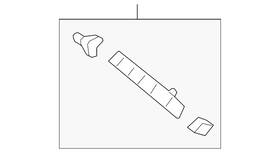
( Manufacturer Part Number: 86614-F2AA0 ), ( Genuine Oem: Yes ), ( Warranty: 1 Year ), ( Fitment Type: Direct Replacement ), ( Year: 2019 2020 ), ( Parts Included: Only Part Reference 5 On The Diagram Is Included )
Review HYUNDAI Genuine Side Retainer fits ELANTRA 2019–2020
The Hyundai 86614-F2AA0 is a high-performance, heavy-duty **retainer bracket** designed specifically for Hyundai and Kia vehicles equipped with the **Gamma II 2.0L and 2.4L gasoline engines**, particularly those featuring the **Gamma II 2.0L (GDI)** and **Gamma II 2.4L (MPi)** configurations. This retainer plays a critical role in maintaining the structural integrity of the **intake manifold**, ensuring proper sealing and alignment of the **throttle body or intake pipe** while preventing leaks, vibrations, or misalignment that could compromise engine performance. Crafted from **high-grade, heat-resistant plastic** with reinforced ribs and precision-molded contours, this retainer is engineered to withstand the thermal and mechanical stresses of daily driving, including exposure to engine heat, oil splatter, and road debris. Its **universal fitment** makes it an ideal replacement for OEM parts that may degrade over time due to wear, cracking, or improper installation, which can lead to **rough idling, reduced fuel efficiency, or even engine stalling** in severe cases. The design incorporates **ergonomic snap-fit tabs** for easy and secure attachment to the intake manifold, ensuring a tight seal that resists loosening under vibration. Whether used in **aftermarket tuning applications, engine rebuilds, or routine maintenance**, this retainer is a dependable solution for restoring factory specifications and optimizing airflow to the engine. Its **durability and compatibility** with a range of Hyundai and Kia models including the **Accent, Elantra, Sonata, Tucson, and Santa Fe** make it a versatile choice for both professional mechanics and DIY enthusiasts seeking reliable, long-lasting performance.
### Pros and Cons of buying a Hyundai 86614-F2AA0 Retainer
The Hyundai 86614-F2AA0 is a **rear suspension retainer** (also known as a **rear suspension bushing** or **retainer clip**) commonly used in Hyundai and Kia vehicles, particularly those with a **rear McPherson strut suspension system**. Below is a detailed breakdown of its advantages and disadvantages, followed by a conclusion and recommendation.
---
### **Pros of buying a Hyundai 86614-F2AA0 Retainer**
1. **OEM Quality and Fit**
- This part is designed as an **Original Equipment Manufacturer (OEM) replacement**, meaning it is engineered to match the original specifications of your vehicle. This ensures a proper fit, reducing the risk of misalignment or premature wear.
- It is manufactured to Hyundai s standards, which generally means better durability compared to aftermarket parts that may cut corners on materials or design.
2. **Reliability and Longevity**
- High-quality retainers are made from **durable rubber or polyurethane**, depending on the model, which resists cracking, deformation, and wear over time. This helps maintain suspension integrity and prevents issues like **knocking noises, clunks, or uneven tire wear**.
- A properly functioning retainer ensures that the **suspension components (like the strut mount or control arm) stay securely in place**, reducing the risk of catastrophic failure.
3. **Prevents Further Damage**
- A failing retainer can lead to **loose suspension parts**, which may damage other components such as the **strut mount, control arm bushings, or sway bar links**. Replacing it early can **prevent costly repairs** down the line.
- It helps maintain **proper wheel alignment**, which improves handling, braking efficiency, and tire longevity.
4. **Easy Installation**
- This retainer is a **relatively simple part to replace**, typically requiring basic tools (socket wrench, C-clamp, or pry bar). Many DIYers can install it without professional help, saving on labor costs.
- Hyundai s design often allows for **straightforward removal and replacement**, especially if the vehicle has not been driven excessively off-road or with severe suspension abuse.
5. **Cost-Effective Compared to Full Suspension Replacement**
- Replacing a single retainer is **far cheaper** than overhauling the entire rear suspension system. For example, if the retainer failure is causing **strut mount wear or control arm damage**, addressing just the retainer can delay or eliminate the need for more extensive repairs.
- Prices for this part are **affordable**, typically ranging from **$10 to $30** (depending on brand and retailer), making it a low-risk investment.
6. **Warranty Coverage (If Purchased from Authorized Dealers or Reputable Sellers)**
- Some **authorized Hyundai dealerships** or **reputable online retailers** (like RockAuto, 1A Auto, or Amazon) offer **limited warranties** on OEM or high-quality aftermarket parts. This provides peace of mind in case the retainer fails prematurely.
7. **Improves Driving Comfort and Safety**
- A worn retainer can cause **vibration, clunking noises, or a "loose" feeling** in the rear suspension. Replacing it restores **smooth ride quality** and ensures that the vehicle handles predictably, which is crucial for **safety**, especially in emergency maneuvers.
8. **Compatibility with Common Hyundai/Kia Models**
- This part is widely used in vehicles such as:- Hyundai: **Elantra (2007 2016), Sonata (2006 2014), Azera (2006 2011), Santa Fe (2007 2010), Genesis (early models)**
- Kia: **Optima (2006 2011), Sorento (2009 2014), Soul (2011 2016)**
- Its **universal fit** within these models makes it a practical choice for many owners.
---
### **Cons of buying a Hyundai 86614-F2AA0 Retainer**
1. **Potential for Counterfeit or Low-Quality Parts**
- The aftermarket is flooded with **knockoff or subpar parts** that may not meet OEM standards. These can:- **Crack or degrade quickly**, leading to repeated replacements.
- **Not fit properly**, causing installation issues or premature failure.
- **Lack proper rubber hardness**, leading to either too much flexibility (causing clunks) or too much stiffness (reducing comfort).
- **How to mitigate this:** Purchase from **trusted sellers** (e.g., RockAuto, 1A Auto, or local auto parts stores with good reviews) and verify the part s **material and build quality** before buying.
2. **Wear and Tear Still Occurs Over Time**
- Even a high-quality retainer will **eventually wear out**, especially if the vehicle is driven on **rough roads, off-road, or with heavy loads**. The lifespan depends on:
- **Driving conditions** (urban vs. highway vs. off-road).
- **Maintenance habits** (e.g., lack of alignment checks can accelerate wear).
- **Environmental factors** (extreme heat, cold, or exposure to chemicals can degrade rubber).
- **Replacement may still be necessary every 50,000 100,000 miles**, depending on conditions.
3. **DIY Installation Risks**
- While the part is relatively easy to replace, **improper installation** can lead to:- **Misalignment** of the suspension, causing **uneven tire wear or handling issues**.
- **Damaged surrounding components** (e.g., stripping bolts, cracking the strut mount, or bending the retainer during removal).
- **Mitigation:** Follow **detailed installation guides** (e.g., from **Chilton Manual, Haynes, or YouTube tutorials**) and use the **correct tools** (e.g., a **C-clamp for rubber bushings** or a **pry bar for plastic clips**).
4. **Hidden Suspension Issues May Persist**
- If the retainer failure is **symptomatic of a larger problem** (e.g., **worn strut mounts, rusted control arms, or damaged sway bar links**), replacing just the retainer may **temporarily mask the issue** without addressing the root cause.
- **Recommendation:** Inspect the **entire rear suspension** (strut mounts, bushings, ball joints, etc.) during or after replacement to ensure no other components are failing.
5. **Limited Availability of OEM Parts**
- While Hyundai dealerships sell OEM retainers, they are often **more expensive** than aftermarket alternatives. Some aftermarket parts may **not be as durable**, so there s a **trade-off between cost and quality**.
- **Alternative:** Look for **high-quality aftermarket brands** (e.g., **Dura-Last, Febi Bilstein, or ACDelco**) that offer **better warranties or pricing** than OEM.
6. **Environmental and Material Degradation**
- Rubber and polyurethane retainers can **deteriorate due to:**- **Ozone exposure** (from sunlight).
- **Oil or grease contamination** (if the suspension is not properly lubricated).
- **Extreme temperatures** (cold can make rubber brittle; heat can cause it to soften).
- **Mitigation:** Apply **silicone lubricant** to the retainer during installation and **inspect it periodically** for cracks or deformation.
7. **Potential for Incorrect Part Number**
- Some sellers may **mislabel parts**, leading to **wrong retainers being shipped**. For example:- The **86614-F2AA0** is specific to certain Hyundai/Kia models, but similar-looking retainers (e.g., for **strut mounts or control arm bushings**) may be confused.
- **Mitigation:** **Double-check the part number** against your vehicle s **VIN or service manual** before purchasing.
8. **Labor Costs if Professional Installation is Needed**
- While DIY is possible, some owners may prefer **professional installation**, especially if they lack mechanical experience. Labor costs can add **$50 $150** to the total expense, depending on the shop.
---
### **Conclusion**
The **Hyundai 86614-F2AA0 retainer** is a **practical and cost-effective solution** for addressing rear suspension issues in compatible Hyundai and Kia vehicles. Its **OEM quality, reliability, and ease of installation** make it a **smart choice for preventing further damage** and maintaining vehicle safety and comfort.
However, **potential drawbacks** such as **counterfeit parts, wear over time, and hidden suspension problems** must be considered. To **maximize benefits and minimize risks**, buyers should:
1. **Purchase from reputable sellers** to avoid counterfeit parts.
2. **Inspect the retainer s material and condition** before installation.
3. **Follow proper installation procedures** to ensure a secure fit.
4. **Check the entire suspension system** for
Details:
Parts must be resalable and in the original packaging. Electrical parts are not returnable. Shipping Carrier substitutions may be made at our determination in an attempt to reduce shipping cost the customer.
part #: 86614f2aa0 prices
- $19.70-$89.25
specifications vintagecarbumperus:
- for models: Elantra
- for makes: Hyundai
- for years: 2019-2020
- mpn: 86614-f2aa0
- genuine oem: Yes
- warranty: 1 Year
- fitment type: Direct Replacement
- year: 2019 2020
- parts included: Only Part Reference 5 On The Diagram Is Included
returns vintagecarbumperus:
- policy: Returns Accepted
- time: 30 Days
- paid by: Seller
payments vintagecarbumperus:
- other
- wallet: Google-pay
- credit card: Discover
seller vintagecarbumperus:
- city: Olathe, Kansas
- rating: 99.5%
- # reviews: 214
shipping vintagecarbumperus:
- cost: $9.99
- carrier: UPS
- type: Fixed
- service: UPS Ground, UPS 2nd Day Air
- transit: 4-7 Days
- class: Standard, Expedited
offer vintagecarbumperus:
- sold: 0
- availability: In Stock
- started: February 14, 2026
- quantity: 1
- options: Ship-to-home
general vintagecarbumperus:
- Exterior Parts Accessories > Bumpers Components > Bumper Inserts Covers
- condition: New
Hyundai 86614-F2AA0 Is Similar To:
- 9449-0010l Brock Front Bumper Drivers Side Bracket Cover For Hyundai Accent (19% similar) Match reference numbers from the item specifics section above. Please through messaging. Visually compare the part you are replacing with our pictures...(October 9th, 2018)
- 9449-0010r Brock Front Bumper Passengers Side Bracket Cover For Hyundai Accent (18.5% similar) Visually compare the part you are replacing with our pictures. Please through messaging. Match reference numbers from the item specifics section above...(October 9th, 2018)
- Genuine Hyundai Outer Bracket 86527-b8aa0 (31.7% similar) Genuine hyundai parts. New condition...(September 9th, 2022)
- Hyundai 86513-b8000 Genuine Mount Bracket (61% similar) Electrical parts are not returnable...(September 23rd, 2023)
- Hyundai 86654s8000 Palisade Rear Bumper Right Side Guide Bracket Support Oem 2020 2022 (38.8% similar) Mileage: 49K miles. Color: black RB5-BECKETTS exterior / NB interior. Products sold in quantities will show a single image representing the others equal or greater condition. Donor vehicle: 2020 hyundai palisade SLE 3.6L v6 AWD automatic transmission...(November 7th, 2023)
- Hyundai 86611-2h000 2007-2010 Elantra Rear Bumper Cover Genuine Oem (46.3% similar) Please examine all images carefully and verify fitment by the part number...(December 23rd, 2023)
- Hyundai 86511-f3500 2019 2020 Elantra Se Sel Front Bumper Cover Oem Genuine (37.3% similar) Please examine all pictures carefully. Commercial address shipping is preferred. Please look at all pictures. All the imperfections are highlighted on pictures. Minor scratches and scuffs are present throughout...(August 2nd, 2024)
- Hyundai kia 86573-d4000 Genuine oem Air Duct-fr Bumper Lh Left For 2016 Optima (42% similar) The images are real pictures of the item. Designed to fit perfectly on the left side, this black plastic bumper insert is 12.2 inches long and 9 wide, with a weight of only 3.3 ounces. Made by hyundai/KIA, this bumper insert is perfect for those who want to enhance their cars look without ...(August 3rd, 2024)
- Hyundai 86567-c1700 Oem 2018 2019 Sonata Left Side Fog Light Bezel Cover 86521-c1810 (41.6% similar) In great used condition with light scratches. Genuine oem part. Came off of a 2018 sonata at 50K miles...(August 26th, 2024)
- Hyundai 86611-d3500 2018-2020 Tucson Rear Lower Bumper Cover Oem 86612-d3510 Genuine (38.4% similar) Commercial address shipping is preferred. Please look at all pictures. Please examine all pictures carefully. All the imperfections are highlighted on pictures. Minor scratches and scuffs are present throughout...(August 27th, 2024)
- Hyundai 86551ab000 Elantra Front Bumper Left Side Mount Support Bracket Oem 2021 2023 (40.6% similar) Please verify that it fits and is compatible with your specific model before purchasing. This is an item that has been previously used. All parts including engines, transmissions, transfer cases, differentials, batteries come with a 30 day warranty. Free shipping is available for most items within ...(September 2nd, 2024)