MAZDA EG21-50-2J1D Retainer
fits model: Cx-7. make: Mazda. year: 2007–2012.
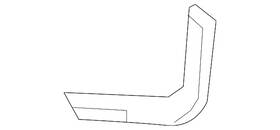
( Manufacturer Part Number: EG21-50-2J1D ), ( Genuine Oem: Yes ), ( Warranty: 1 Year ), ( Fitment Type: Direct Replacement ), ( Year: 2007 2008 2009 2010 2011 2012 ), ( Parts Included: Only Part Reference 10 On The Diagram Is Included )
Review MAZDA Genuine Retainer fits CX-7 2007–2012
The **Mazda EG21-50-2J1D retainer** is a precision-engineered component designed specifically for Mazda s EG21 engine family, including models like the Mazda3, Mazda6, and Mazda CX-5, among others. This retainer plays a critical role in maintaining the structural integrity and alignment of the camshaft timing system, ensuring smooth and reliable operation of the engine s valve train. Crafted from high-quality, heat-treated steel, the retainer is engineered to withstand the intense mechanical stresses and thermal fluctuations inherent in high-performance and daily-driving applications. Its robust construction prevents premature wear, reducing the risk of catastrophic failure, such as camshaft misalignment or valve spring retention issues, which can lead to costly repairs and engine damage. The EG21-50-2J1D retainer is meticulously machined to exacting tolerances, guaranteeing a perfect fit with the corresponding camshaft lobes and valve springs, thereby optimizing engine performance and longevity. Whether used in original equipment applications or as a high-quality replacement part for maintenance or upgrades, this retainer exemplifies Mazda s commitment to durability and engineering excellence. Its compatibility with the EG21 engine s timing chain system ensures seamless integration, allowing for hassle-free installation by mechanics and DIY enthusiasts alike. For those seeking a dependable, long-lasting solution to preserve their Mazda s engine health, the EG21-50-2J1D retainer is an indispensable component that delivers both reliability and peace of mind.
### Pros and Cons of Buying a Mazda EG21-50-2J1D Retainer
#### **Overview**
The Mazda EG21-50-2J1D is a **2J-GE engine** (a naturally aspirated inline-4) commonly found in models like the **Mazda3 (2004-2009)** and **Mazda6 (2003-2008)**. This engine is known for its reliability, performance, and aftermarket support. Below is a detailed breakdown of its advantages and disadvantages.
---
### **Pros**
1. **Reliability and Durability**
- The **2J-GE** is a well-engineered engine with a **cast-iron block** and **aluminum head**, which makes it robust against heat and stress.
- With proper maintenance (oil changes, timing belt replacement every **60,000 100,000 miles**), it can easily last **200,000 miles**.
- Fewer common issues compared to some other Mazda engines of the era (e.g., the **2.5L 2Z-R engines** in older models).
2. **Performance and Driving Experience**
- Produces **160 170 horsepower** (depending on model year and tuning), providing a **smooth, linear powerband** that makes it enjoyable to drive.
- Responsive throttle and good low-end torque, making it suitable for both **daily driving and light tuning**.
- Naturally aspirated design means **no turbo lag**, offering instant power delivery.
3. **Aftermarket Support and Tuning Potential**
- One of the **most popular Mazda engines for tuning**, with a **thriving aftermarket** for parts, upgrades, and modifications.
- Easy to **bolt-on turbocharging, supercharging, or forced induction** (common setups include **turbo kits, intake upgrades, and exhaust systems**).
- Supports **ECU remapping** (e.g., **Mazdaspeed, Haltech, or standalone ECUs**) for power gains.
- **Headers, camshafts, and fuel system upgrades** are widely available and relatively affordable.
4. **Fuel Efficiency (Stock Configuration)**
- Stock **2J-GE engines** achieve **good fuel economy** ( 22 28 MPG combined, depending on model and driving conditions).
- When tuned or modified, efficiency drops slightly but remains **better than many turbocharged engines** in its class.
5. **Availability of Parts and Service**
- **Widely available used parts** due to the engine s popularity.
- **Mazda dealerships and independent mechanics** are familiar with this engine, making repairs and maintenance easier.
- **DIY-friendly** many components (e.g., timing belt, water pump, spark plugs) are accessible and replaceable without specialized tools.
6. **Resale Value (Stock or Lightly Modified)**
- Stock **Mazda3/Mazda6 (2J-GE)** models hold **decent resale value**, especially in **low-mileage condition**.
- **Tuned or modified versions** retain value well among enthusiasts, particularly if they have **documented maintenance records**.
7. **Lightweight and Compact Design**
- The **inline-4 layout** keeps the engine **compact and balanced**, contributing to **good handling**.
- **Low center of gravity** improves stability, making it a **great choice for sport-tuned builds**.
---
### **Cons**
1. **Timing Belt and Water Pump Failure Risks**
- The **timing belt** must be replaced **every 60,000 100,000 miles** (or **5 7 years**, whichever comes first). Failure can cause **valve damage or catastrophic engine failure**.
- Some owners report **water pump failures** around the same interval, which can lead to **overheating** if not addressed.
2. **Oil Consumption (In Some Cases)**
- A **minor but known issue** is **oil consumption**, particularly in **higher-mileage engines**. Some owners report burning **1 quart every 1,000 2,000 miles**.
- **Solution:** Regular oil changes with **high-quality synthetic oil** (e.g., **Mobil 1, Pennzoil Platinum**) can mitigate this.
3. **Head Gasket and Cooling System Issues**
- **Head gasket failures** can occur if the engine **overheats frequently** or if maintenance is neglected.
- Some models (especially **pre-2006**) had **cooling system quirks**, such as **thermostat or radiator issues**, which could lead to **overheating**.
- **Solution:** Ensure the **cooling system is flushed every 5 years** and the **thermostat is functioning properly**.
4. **Suspension and Drivetrain Wear (In Older Models)**
- **Front struts, bushings, and control arms** wear out around **80,000 120,000 miles**, requiring replacement for a **smooth ride**.
- **Transmission (5-speed manual or 4-speed auto)** can develop **rough shifting or slipping** if not maintained.
- **Solution:** Regular **suspension inspections** and **transmission fluid changes** extend their lifespan.
5. **Electrical and Sensor Issues**
- Some **2J-GE engines** suffer from **faulty oxygen sensors, crankshaft position sensors, or camshaft sensors**, leading to **check engine lights**.
- **Solution:** Replacing **failing sensors** (typically **$50 $150 each**) resolves most issues.
6. **Turbocharged Modifications Can Be Expensive**
- While the **2J-GE is great for forced induction**, **turbocharging requires careful tuning** to avoid **detonation, oil dilution, or engine damage**.
- **High-quality turbo kits** (e.g., **Garrett GTX, BorgWarner EFR**) and **supporting mods** (intercooler, fuel system upgrades) can **add up in cost**.
- **Poorly executed builds** can lead to **premature engine failure** due to **overboosting or insufficient cooling**.
7. **Depreciation (Stock Models)**
- While **not as severe as some Japanese engines**, stock **Mazda3/Mazda6** models **lose value over time**, especially after **100,000 miles**.
- **Modified versions** (especially **turbocharged or supercharged**) hold value better among **enthusiasts**.
8. **Limited Stock Performance (Compared to Modern Engines)**
- The **2J-GE is not as powerful as modern turbocharged engines** (e.g., **Skyactiv-G, Ford EcoBoost, or Toyota 2GR-FKS**).
- **Stock power ( 160 170 HP)** is **adequate but not dominant** in modern performance circles.
---
### **Ending Conclusion**
The **Mazda EG21-50-2J1D (2J-GE engine)** is a **fantastic choice** for buyers who value **reliability, tunability, and driving enjoyment**. It strikes a **great balance between stock performance and aftermarket potential**, making it ideal for:
- **Daily drivers** who want a **fun, efficient, and maintainable** car.
- **Enthusiasts** looking to **build a performance project** with **proven durability**.
- **Budget-conscious buyers** who want a **highly modifiable engine** without breaking the bank.
However, it is **not without its quirks** **timing belt maintenance, oil consumption, and cooling system reliability** require **attention**. If you **neglect maintenance**, the engine can develop **costly issues**, but with **proper care**, it remains one of the **most rewarding engines** to own and modify.
---
### **Recommendation**
#### **Buy If:**You want a **reliable, fun-to-drive** car with **great aftermarket support**.
You plan to **modify it** (turbo, supercharger, or forced induction).
You **prioritize maintenance** (oil changes, timing belt replacement, cooling system checks).
You prefer a **naturally aspirated engine** with **linear power delivery**.
You find a **low-mileage example (under 100,000 miles) with a clean service history**.
#### **Avoid If:**You **don t want to perform regular maintenance** (timing belt, oil changes, cooling system).
You **can t afford potential repairs** (head gasket, water pump, suspension).
You **prefer modern turbocharged engines** with **higher stock power**.
You **don t like the idea of oil consumption** (though it s manageable with synthetic oil).
You **want a plug-and-play performance car** (this engine requires **some mechanical knowledge** for mods).
#### **Best Use Cases:**- **Stock or lightly modified daily driver** (great for **daily commuting weekend fun**).
- **Project car for forced induction** (one of the **best NA engines for turbo/supercharger builds**).
- **Rally or track car**
Details:
Parts must be resalable and in the original packaging. Shipping Carrier substitutions may be made at our determination in an attempt to reduce shipping cost the customer. Genuine Mazda Parts. Electrical parts are not returnable.
part #: eg21502j1d prices
- $17.40-$27.90
specifications vintagecarbumperus:
- for models: Cx-7
- for makes: Mazda
- for years: 2007-2012
- mpn: Eg21-50-2j1d
- genuine oem: Yes
- warranty: 1 Year
- fitment type: Direct Replacement
- year: 2007 2008 2009 2010 2011 2012
- parts included: Only Part Reference 10 On The Diagram Is Included
shipping vintagecarbumperus:
- class: Standard
- cost: $9.99
- service: Standard
- transit: 4-9 Days
- type: Fixed
general vintagecarbumperus:
- condition: New
- Exterior Parts Accessories > Bumpers Components > Bumper Inserts Covers
returns vintagecarbumperus:
- paid by: Seller
- time: 30 Days
- policy: Returns Accepted
seller vintagecarbumperus:
- city: Chesapeake, Virginia
- rating: 100.0%
- # reviews: 1072
payments vintagecarbumperus:
- wallet: Google-pay
- credit card: Discover
- other
offer vintagecarbumperus:
- sold: 0
- quantity: 4
- started: March 23, 2026
- availability: In Stock
- options: Ship-to-home
Mazda EG21-50-2J1D Is Similar To:
- Mazda Bdtt500t6 3 Front Bumper Cover Mount Retainer Bracket Oem 2019 2024 set Of 2 (35% similar) This is an item that has been previously used. Free shipping is available for most items within the 48 states. Please verify that it fits and is compatible with your specific model before purchasing. All parts including engines, transmissions, transfer cases, differentials, batteries come with a 30 ...(August 27th, 2024)
- Mazda Bdts500u1 3 Front Bumper Left Side Retainer Support Bracket Oem 2019 2024 (34.5% similar) Free shipping is available for most items within the 48 states. This is an item that has been previously used. All parts including engines, transmissions, transfer cases, differentials, batteries come with a 30 day warranty. Please verify that it fits and is compatible with your specific model ...(August 28th, 2024)
- Mazda Dgh9-50221 2020 2022 Cx-30 Rear Bumper Cover Oem Genuine (40.8% similar) Minor scratches and scuffs are present throughout. Commercial address shipping is preferred. Please look at all pictures. Please examine all pictures carefully. All the imperfections are highlighted on pictures...(September 16th, 2024)
- Mazda Dgh9502j1 Cx-30 Rear Bumper Left Side Retainer Support Bracket Oem 2020 2023 (43.7% similar) Color: blue 42M-DEEP crystal mica exterior / black interior. Mileage: 6k miles. Donor vehicle: 2021 mazda CX-30 select 2 .5L AWD automatic transmission. This is an item that has been previously used. Free shipping is available for most items within the 48 states. Please verify that it fits and is ...(December 9th, 2024)
- Mazda Gj6a-50-151b Genuine Support Bracket (57.1% similar) Electrical parts are not returnable. Shipping carrier substitutions may be made at our determination in an attempt to reduce shipping cost the customer. Parts must be resalable and in the original packaging...(January 7th, 2025)
- Mazda Bdts-50-7e0b-13 Genuine Upper Grille (57.1% similar) Electrical parts are not returnable. Shipping carrier substitutions may be made at our determination in an attempt to reduce shipping cost the customer. Parts must be resalable and in the original packaging. Japan built, without front camera, titanium. Genuine mazda parts...(January 24th, 2025)
- Mazda Td11-50-331a Genuine Outer Bracket (64% similar) Quirk parts, outer bracket. Genuine mazda part number: TD11-50-331A...(January 29th, 2025)
- Mazda Tk78-50-c21b Genuine Outer Cover (65.8% similar) Parts must be resalable and in the original packaging. Shipping carrier substitutions may be made at our determination in an attempt to reduce shipping cost the customer. Electrical parts are not returnable...(March 5th, 2025)
- Mazda Genuine Parts Kd53-50-el1a 2013 2016 Cx-5 Rear Bumper Left And Right Side Tow Hook Cover Eye Cap Oem (26.6% similar) Small scratches. There is a picture with part number. Shipping price posted is only to 48 continuous states. Ready for a fast shipping. The item might have some light scratches or scuffs. Please examine all pictures carefully, especially close up. Please verify fitment by the part number provided. ...(March 14th, 2025)
- Mazda Bgv450a10b Oem Genuine Mazda3 12-13 Bgv4-50-a10b Front Bumper Tow Hook Eye Cap Cover (36.8% similar) The item must be in their original packaging with manufacturer label on it, not used, tried, or installed. BGV4-50-A10B / BGV450A10B. The item is not in its original packaging. The item has been used, installed, disassembled, or tested. If the return conditions have not been met, then we must ...(March 16th, 2025)
- Mazda D10j-50-2h1b Genuine Side Retainer (80% similar) Shipping carrier substitutions may be made at our determination in an attempt to reduce shipping cost the customer. Parts must be resalable and in the original packaging. Electrical parts are not returnable...(March 31st, 2025)