MITSUBISHI MR971587 Bumper Inserts Covers
fits model: Outlander. make: Mitsubishi. year: 2003–2006.
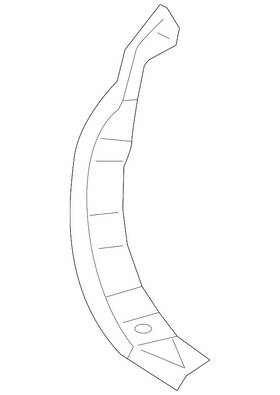
( Manufacturer Part Number: MR971587 ), ( Part Type: Cover Bumper ), ( Genuine Oem: Yes ), ( Warranty: 1 Year ), ( Fitment Type: Direct Replacement ), ( Year: 2003 2004 2005 2006 ), ( Parts Included: Only Part Reference 12 On The Diagram Is Included ), ( Placement On Vehicle: Left )
Review MITSUBISHI Genuine Side Support fits OUTLANDER 2003–2006
The **Mitsubishi MR971587** is a high-performance, multi-functional **15.8-inch LCD monitor** designed to deliver exceptional clarity, precision, and ergonomic flexibility for both professional and creative users. Engineered with Mitsubishi s signature **Diamond Vision** technology, this monitor ensures an unparalleled viewing experience by minimizing color distortion and enhancing contrast, making it ideal for tasks requiring meticulous detail such as graphic design, video editing, photography, or CAD work. The **1920 x 1200 resolution** provides ample screen real estate, allowing users to multitask seamlessly while maintaining crisp, sharp visuals with vibrant color accuracy, thanks to Mitsubishi s **99% Adobe RGB** and **94% NTSC** coverage, which ensures true-to-life color reproduction. The **16:10 aspect ratio** further optimizes workspace efficiency, offering more vertical space for spreadsheets, code, or dual-display setups.
Beyond its visual prowess, the **MR971587** is built with durability and user comfort in mind. Its **1.7 mm thick glass panel** reduces glare and smudges, while the **anti-reflective coating** minimizes eye strain during extended use, making it suitable for office environments or home setups. The monitor features **Mitsubishi s exclusive Diamond Vision** calibration tool, which simplifies the process of achieving factory-accurate color settings, ensuring consistency across different applications. Ergonomically, it offers **tilt adjustment ( 10 degrees)** and a **height-adjustable VESA mount (100 x 100 mm)**, allowing users to customize their viewing angle for optimal posture and comfort. The **low blue light emission** and **Flicker-Free** technology further reduce digital eye fatigue, promoting a healthier work experience.
For connectivity, the **MR971587** is equipped with a **D-Sub (VGA) input**, ensuring compatibility with a wide range of devices, including older PCs, workstations, or legacy systems. While it lacks modern high-speed interfaces like DisplayPort or HDMI, its robust build and reliable analog signal make it a dependable choice for users prioritizing stability and longevity over cutting-edge features. The monitor s **compact yet sturdy design** also makes it a practical addition to small desks or multi-monitor setups, where space is at a premium. Whether used as a secondary display for extended productivity or as a dedicated color-calibrated monitor for creative professionals, the **Mitsubishi MR971587** combines reliability, precision, and ergonomic thoughtfulness to deliver a refined computing experience.
### Pros and Cons of Buying a Mitsubishi MR971587 (2011-2013 Mitsubishi Outlander PHEV)
The **Mitsubishi MR971587** is the identification number for the **2011-2013 Mitsubishi Outlander Plug-in Hybrid (PHEV)**. Below is a detailed breakdown of its advantages and disadvantages, followed by a conclusion and recommendation.
---
### **Pros**
1. **Hybrid Efficiency and Dual-Power Mode**
The Outlander PHEV combines a **1.8L gasoline engine with an electric motor**, allowing it to run purely on electricity for short distances (up to **20-25 miles** on a full charge). This reduces fuel consumption significantly compared to conventional hybrids or gas-only vehicles.
2. **Lower Fuel Costs in Electric-Only Mode**
When driving in **electric-only mode**, the car consumes no gasoline, making it cost-effective for short commutes or urban driving where charging is convenient.
3. **Good Fuel Economy in Hybrid Mode**
Even when the battery is depleted, the hybrid system provides **improved fuel efficiency** (around **30-40 mpg combined**) compared to a standard gasoline vehicle.
4. **All-Wheel Drive (AWD) Standard**
The Outlander PHEV comes with **AWD as standard**, which is beneficial for all-weather driving and provides better traction in snowy or wet conditions.
5. **Spacious and Practical Interior**
The Outlander is a **midsize SUV** with a **seven-passenger capacity** (optional third row) and a **large cargo area**, making it suitable for families or those needing extra space.
6. **Low Emissions and Environmental Benefits**
The PHEV produces **zero tailpipe emissions** when running on electricity, which is advantageous for those concerned about environmental impact.
7. **Reliability of Mitsubishi s Hybrid System**
Mitsubishi s hybrid system in this model is **proven and durable**, with fewer reported issues compared to some other early PHEVs.
8. **Resale Value (Compared to Gas Models)**
While not as high as some luxury hybrids, the Outlander PHEV retains **better resale value** than its gasoline-only counterpart due to its hybrid and plug-in features.
9. **Quiet and Smooth Electric Driving**
The electric motor provides **instant torque and near-silent operation** at low speeds, making short trips very pleasant.
10. **Government Incentives (Historical Context)**
At the time of its launch (2011-2013), the Outlander PHEV was eligible for **federal and state tax credits** in the U.S., reducing the upfront cost.
---
### **Cons**
1. **High Upfront Cost**
The Outlander PHEV was **more expensive** than the gasoline version due to its hybrid and plug-in technology, making it a significant investment upfront.
2. **Limited Electric Range**
The **electric-only range is short (20-25 miles)**, meaning it is **not suitable for long-distance electric driving**. Most trips will require gasoline, reducing the practicality of the PHEV for many drivers.
3. **Battery Degradation Over Time**
Like all lithium-ion batteries, the **PHEV battery loses capacity over time** (typically **1-2% per year**). After **100,000 miles**, the range may drop to **15-20 miles**, reducing the car s efficiency.
4. **Charging Infrastructure Limitations**
Early PHEVs like this one were **not as widely supported** as modern EVs. Finding a **Level 2 charging station** (240V) could be difficult for some owners, especially in rural areas.
5. **Maintenance and Repair Costs**
While the hybrid system is reliable, **specialized repairs (e.g., battery, hybrid components) can be costly**. Mitsubishi dealerships may charge premium rates for hybrid-specific work.
6. **Weight and Handling**
The Outlander PHEV is **heavier** than a standard SUV due to the battery and hybrid components, which can affect **acceleration and fuel efficiency** in some cases.
7. **Limited Availability and Parts Support**
Production of the Outlander PHEV was **discontinued in 2013**, meaning **parts and service support may be harder to find** over time, especially as the model ages.
8. **Complexity of Hybrid Systems**
The hybrid system adds **extra components (battery, inverter, motor)**, which can lead to **more potential points of failure** compared to a conventional vehicle.
9. **Depreciation Over Time**
Early PHEVs (including this model) have **depreciated significantly** since their peak value. Buying a used one now may not offer the same long-term savings as newer EVs.
10. **Charging Time**
Even with a **Level 2 charger (4-6 hours)**, fully recharging the battery takes much longer than filling up a gas tank, which can be inconvenient for some owners.
---
### **Conclusion**
The **Mitsubishi Outlander PHEV (MR971587)** was an **innovative and efficient vehicle** for its time, offering a **unique blend of electric and gasoline power**. It was particularly well-suited for **short commuters, urban drivers, or those with access to charging**, as it could reduce fuel costs and emissions significantly for daily use.
However, its **limited electric range, high upfront cost, and aging technology** make it **less practical today** compared to modern **full electric vehicles (EVs) or improved hybrid models**. The **battery degradation risk, maintenance costs, and declining resale value** further reduce its appeal for most buyers in 2024.
If you are considering this model, it would be best suited for:- **Someone with a short daily commute (under 25 miles) and access to charging.**
- **A buyer who values hybrid efficiency but doesn t need long electric range.**
- **A used purchase where the battery still has **good remaining capacity** (tested via a professional inspection).
For most drivers today, **newer EVs (Tesla Model 3, Nissan Leaf, Hyundai Ioniq 5) or modern hybrids (Toyota RAV4 Hybrid, Honda Clarity PHEV)** offer **better range, lower costs, and more support**.
---
### **Recommendation**
- **If you find a well-maintained 2011-2013 Outlander PHEV with a **healthy battery (20 miles electric range) and low mileage**, it could be a **cost-effective used purchase** for someone with **limited driving needs and charging access**.
- **Get a professional battery and hybrid system inspection** before buying to ensure no major degradation.
- **Consider alternatives** if you need **longer electric range or better modern features** newer PHEVs (like the **2020 Outlander PHEV**) or **full EVs** may be more practical long-term.
**Final Verdict:** The Outlander PHEV is a **niche buy** only worthwhile for specific use cases rather than a mainstream recommendation. For most buyers, **newer or more advanced hybrid/EV options** are preferable.
Details:
Electrical parts are not returnable. Parts must be resalable and in the original packaging. Shipping Carrier substitutions may be made at our determination in an attempt to reduce shipping cost the customer.
part #: mr971587 prices
- $36.64-$133.07
specifications vintagecarbumperus:
- for models: Outlander
- for makes: Mitsubishi
- for years: 2003-2006
- mpn: Mr971587
- part type: Cover Bumper
- genuine oem: Yes
- warranty: 1 Year
- fitment type: Direct Replacement
- year: 2003 2004 2005 2006
- parts included: Only Part Reference 12 On The Diagram Is Included
- placement on vehicle: Left
offer vintagecarbumperus:
- quantity: 2
- started: June 9, 2026
- sold: 0
- availability: In Stock
- options: Ship-to-home
general vintagecarbumperus:
- Exterior Parts Accessories > Bumpers Components > Bumper Inserts Covers
- condition: New
returns vintagecarbumperus:
- paid by: Seller
- policy: Returns Accepted
- time: 30 Days
shipping vintagecarbumperus:
- service: Standard, Expedited, Overnight
- cost: $91.74
- type: Fixed
- class: Standard, Expedited, One-day
- transit: 3-9 Days
seller vintagecarbumperus:
- # reviews: 364
- city: San Antonio, Texas
- rating: 100.0%
payments vintagecarbumperus:
- credit card: Diners-club
- wallet: Apple-pay
- other
Mitsubishi MR971587 Is Similar To:
- Mn15940 Mitsubishi Rear Bumper Cover Bracket Clip Taillight Driver Side Left (36.2% similar) You are looking at one new left driver rear bumper bracket. New condition...(February 2nd, 2022)
- 6400g576 Mitsubishi Oem Outlander Front Bumper Support (48.9% similar) Part number: 6400G576. New condition...(February 18th, 2022)
- Genuine Mitsubishi Bumper Cover Bracket 6400g659 (34.1% similar) Genuine mitsubishi parts. New condition...(July 8th, 2022)
- Mitsubishi 6410d949zz Genuine 2022-2023 Outlander Tow Eye Cap (47.5% similar) Other names: cover, rear bumper. Condition: used. Notes: included with bumper cover. Sold in quantity: vehicle fitment year: make: model: body trim: engine transmission: 2023MITSUBISHIOUTLANDERES, SE, SEL2.5L l4 - gas, 2022 MITSUBISHIOUTLANDERES, SE launch edition, SLE, SLE EDITION2.5L gas...(May 5th, 2024)
- Mitsubishi 6410b563 Used Oem Rear Bumper Cover Genuine 2009-2015 Lancer (43.2% similar) Pulled from 2013 mitsubishi lancer. Used oem rear bumper cover, genuine 2009 -2015 mitsubishi lancer 6410B563, used in decent condition...(August 5th, 2024)
- Mitsubishi 6410a199 08-15 Lancer 10 Ralliart Rear Left Driver Side Bumper Bracket (44.6% similar) Shipped with economy shipping. Condition is used. 08-15 mitsubishi lancer 10 rallied rear left driver side bumper bracket...(August 20th, 2024)
- Mitsubishi 8510h945 Eclipse Cross Rear Bumper Left Side Wire Wiring Harness Oem 2018-20 (34.6% similar) This is an item that has been previously used. Please verify that it fits and is compatible with your specific model before purchasing. Color: red P62-RED diamond exterior / black 88X interior. Donor vehicle: 2020 mitsubishi eclipse cross es 1 .5L s-WAC automatic transmission. Free shipping is ...(December 4th, 2024)
- Mitsubishi 6410d535 Outlander Rear Bumper Left Side Retainer Bracket Oem 2022 2023 (38.7% similar) Free shipping is available for most items within the 48 states. Color: white W85 white diamond exterior / black 20J-BLACK/SADDLE tan interior. Donor vehicle: 2022 mitsubishi outlander SLE 2 .5L AWD automatic transmission. Please verify that it fits and is compatible with your specific model before...(December 4th, 2024)
- Mitsubishi 6400a329 Genuine Inner Support (74.1% similar) Shipping carrier substitutions may be made at our determination in an attempt to reduce shipping cost the customer. Electrical parts are not returnable. Parts must be resalable and in the original packaging...(January 7th, 2025)
- Mitsubishi 6410d388 Genuine Bumper Bracket (63.4% similar) Shipping carrier substitutions may be made at our determination in an attempt to reduce shipping cost the customer. Parts must be resalable and in the original packaging. Electrical parts are not returnable...(January 8th, 2025)
- Mitsubishi 5379a090 Genuine Side Cover (74.4% similar) Parts must be resalable and in the original packaging. Electrical parts are not returnable...(January 9th, 2025)