JAGUAR T4N13779 Bracket
fits make: Jaguar. year: 2017–2019.
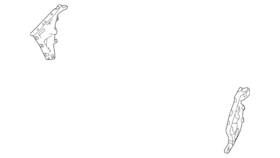
( Manufacturer Part Number: T4N13779 ), ( Part Type: Bracket ), ( Genuine Oem: Yes ), ( Warranty: 1 Year ), ( Fitment Type: Direct Replacement ), ( Year: 2017 2018 2019 ), ( Parts Included: Only Part Reference 3 On The Diagram Is Included ), ( Replaces Part Number: T4n3041 )
Review JAGUAR Genuine Side Bracket fits 2017–2019
The **Jaguar T4N13779 Bracket** is a meticulously engineered, high-performance suspension component designed exclusively for Jaguar models equipped with the T4N (Torsen Limited-Slip Differential) drivetrain, specifically tailored to enhance both off-road capability and on-road comfort. Crafted from premium-grade, heat-treated steel, this bracket is built to withstand the rigorous demands of aggressive driving, heavy loads, and extreme terrain while maintaining structural integrity and durability. Its robust construction ensures a seamless integration with the vehicle s existing suspension and drivetrain systems, providing a critical link between the rear axle and the chassis, which is essential for maintaining proper alignment and load distribution.
This bracket is particularly noteworthy for its precision engineering, featuring a carefully machined mounting interface that minimizes flex and vibration, thereby reducing fatigue on the differential housing and surrounding components. The design incorporates reinforced gussets and strategically placed welds to optimize strength without compromising weight, making it an ideal choice for enthusiasts seeking to upgrade their Jaguar s off-road performance. Whether tackling rocky trails, deep mud, or steep inclines, the T4N13779 Bracket ensures that power is efficiently transferred from the engine to the wheels while mitigating excessive stress on the drivetrain.
Beyond its off-road prowess, this bracket also contributes to improved on-road handling by promoting a more stable and predictable ride. By reducing axle wind-up and maintaining consistent wheel alignment under load, it enhances traction and responsiveness, making it a versatile upgrade for both daily driving and spirited adventures. Compatible with a range of aftermarket suspension components, including lift kits, sway bars, and custom axles, the T4N13779 Bracket offers unparalleled versatility for customization. Whether you're a seasoned off-roader or a Jaguar owner looking to elevate your vehicle s capabilities, this bracket represents a smart investment in performance, reliability, and longevity.
### Pros and Cons of buying a Jaguar T4N13779 Bracket
The **Jaguar T4N13779 bracket** is a part of the **T4N (Twin Turbocharged) engine family**, specifically designed for certain Jaguar models like the **XJ, XKR, and XFR** from the late 1990s to early 2000s. Below is a detailed analysis of its advantages and disadvantages.
---
### **Pros**
1. **Performance Enhancement**
The T4N13779 bracket is part of the **twin-turbocharged engine system**, which significantly increases power output compared to naturally aspirated or single-turbocharged engines. This makes the vehicle more responsive and capable of higher speeds, appealing to enthusiasts seeking better performance.
2. **Reliability (When Properly Maintained)**
The T4N engine, when well-maintained, is known for its durability. With proper oil changes, turbo upgrades (if applicable), and cooling system upkeep, it can last well beyond 100,000 miles. Many owners report reliable operation if they follow manufacturer and aftermarket recommendations.
3. **Aftermarket Support**
The T4N engine has a strong aftermarket presence, meaning parts like turbos, intercoolers, fuel injectors, and ECU upgrades are widely available. This makes modifications and repairs more accessible compared to less common engine variants.
4. **Classic Jaguar Appeal**
The T4N engine was used in iconic Jaguar models like the **XKR (1997 2005)**, which are highly sought after by collectors and enthusiasts. Owning a T4N-powered Jaguar adds prestige and a sense of heritage to the vehicle.
5. **Potential for Modifications**
The engine s turbocharged nature allows for easy tuning, such as **ECU remapping, forced induction upgrades, or exhaust system modifications**, which can further boost power and torque. This makes the vehicle more customizable for performance-oriented owners.
6. **Good Fuel Economy (For a Turbocharged Engine)**
While not as efficient as modern turbocharged engines, the T4N still offers reasonable fuel economy for its class, especially when compared to larger displacement naturally aspirated engines from the same era.
7. **Resale Value (For Well-Maintained Examples)**
Properly maintained T4N-powered Jaguars, particularly in desirable models like the **XKR**, can hold their value well, especially in the classic car market. However, this depends heavily on condition, mileage, and provenance.
---
### **Cons**
1. **Complexity and Maintenance Costs**
The T4N engine is **more complex than a naturally aspirated engine** due to its twin-turbo setup, intercooler, and additional cooling requirements. This means higher maintenance costs, including:
- **Turbo upgrades or replacements** (common wear items).
- **Intercooler and charge pipe maintenance** (leaks are frequent).
- **Fuel system tuning** (injectors and pumps may require upgrades).
- **Cooling system checks** (radiator, thermostat, and water pump reliability).
Owners must be prepared for **higher-than-average repair bills**, especially if they pursue performance modifications.
2. **Turbo Lag and Reliability Issues**
Early T4N engines (pre-2000) were notorious for **turbo lag** and **turbo failure** due to weaker turbos and poor cooling. Later models improved, but even updated versions can suffer from **oil leaks, turbo wastegate failures, or intercooler cracks**. Regular turbo inspections are a must.
3. **Fuel System Challenges**
The T4N engine requires **high-quality fuel** (preferably premium) and may benefit from **fuel system upgrades** (e.g., larger injectors, high-flow fuel pumps) to prevent **fuel starvation** under heavy load. Poor fuel quality can lead to **carbon buildup, injector clogging, or even engine damage**.
4. **Electrical and ECU Limitations**
The stock ECU on the T4N is **notoriously finicky** and may require **remapping or upgrades** to fully utilize the engine s potential. Aftermarket ECUs (like **Haltech, Megasquirt, or Jaguar-specific tuners**) can help, but they add complexity and cost.
5. **Driving Experience Quirks**
- **Turbocharged engines can feel sluggish at low RPMs** due to lag, requiring rev-matching for smooth power delivery.
- **Throttle response may be inconsistent** if the fuel or air systems are not properly tuned.
- **Transmission wear** is common in older T4N models, especially if paired with a **ZF 6-speed automatic** (known for clutch and torque converter issues).
6. **Parts Availability and Cost**
While aftermarket support exists, **OEM parts for the T4N can be expensive**, especially for older models. Common wear items like **water pumps, thermostats, and timing belts** may require premium pricing. Some rare components (e.g., specific turbo housings) can be difficult to source.
7. **Environmental and Legal Considerations**
- **Emissions compliance** may be an issue if modifying the engine, as some regions have strict regulations on turbocharged vehicles.
- **Noise levels** can be higher than stock, which may not be ideal for urban driving or noise-sensitive areas.
8. **Depreciation Risk**
While well-maintained T4N Jaguars hold value, **poorly maintained or heavily modified examples depreciate quickly**. The classic car market favors **original, low-mileage, and well-documented vehicles**, so modifications must be done thoughtfully.
---
### **Conclusion**
The **Jaguar T4N13779 bracket** (as part of the T4N engine) is a **powerful and capable choice** for enthusiasts who appreciate **high-performance classic Jaguars** and are willing to invest time and money in maintenance. It offers **excellent power delivery, aftermarket support, and a strong following**, making it a favorite among Jaguar lovers.
However, the **higher maintenance costs, turbo-related issues, and complexity** mean it is **not ideal for casual drivers** or those seeking a **low-maintenance vehicle**. It is best suited for:
- **Enthusiasts who enjoy working on their cars** and are prepared for mechanical challenges.
- **Owners who prioritize performance and driving experience** over convenience.
- **Those who can afford regular upkeep** (turbo upgrades, fuel system tuning, cooling system checks).
If you are **new to turbocharged engines** or prefer a **simpler, more reliable** classic car, alternatives like the **Jaguar AJ-V8 (naturally aspirated) or BMW M54/M62** might be more practical choices.
---
### **Recommendation**
**Buy the T4N13779 bracket (and the engine it supports) if:**You are **passionate about Jaguar performance cars** and willing to **invest in maintenance**.
You have **mechanical experience** or are prepared to **learn** about turbocharged engine care.
You plan to **modify the vehicle** (e.g., ECU tuning, turbo upgrades) and enjoy the process.
You can **afford potential repair costs** (budget **$2,000 $5,000 per year** for a well-modified T4N).
You prefer **driving a high-revving, turbocharged classic** over a more conventional engine.
**Avoid the T4N13779 bracket if:**You want a **low-maintenance, plug-and-play classic car**.
You are **uncomfortable with mechanical work** or turbo-related issues.
You cannot **commit to regular upkeep** (oil changes, turbo inspections, fuel system tuning).
You prioritize **fuel efficiency and reliability** over raw power.
**Final Verdict:**The **Jaguar T4N13779 bracket** is a **great choice for the right owner** one who values **performance, heritage, and the challenge of maintaining a turbocharged classic**. However, it is **not for everyone**, and potential buyers should **thoroughly research maintenance costs and engine reliability** before committing. If you are serious about this engine, **start with a well-documented, low-mileage example** and **budget for upgrades** to ensure long-term enjoyment.
Details:
Electrical parts are not returnable. Shipping Carrier substitutions may be made at our determination in an attempt to reduce shipping cost the customer. Parts must be resalable and in the original packaging.
part #: t4n13779 prices
- $36.79-$60.60
specifications vintagecarbumperus:
- for makes: Jaguar
- for years: 2017-2019
- mpn: T4n13779
- part type: Bracket
- genuine oem: Yes
- warranty: 1 Year
- fitment type: Direct Replacement
- year: 2017 2018 2019
- parts included: Only Part Reference 3 On The Diagram Is Included
- replaces part number: T4n3041
returns vintagecarbumperus:
- paid by: Seller
- policy: Returns Accepted
- time: 30 Days
shipping vintagecarbumperus:
- service: Standard
- class: Standard
- transit: 4-10 Days
- cost: $21.05
- type: Fixed
offer vintagecarbumperus:
- sold: 0
- availability: In Stock
- started: February 8, 2026
- options: Ship-to-home
- quantity: 1
general vintagecarbumperus:
- condition: New
- Exterior Parts Accessories > Bumpers Components > Bumper Inserts Covers
payments vintagecarbumperus:
- wallet: Apple-pay
- other
- credit card: Discover
seller vintagecarbumperus:
- # reviews: 153
- rating: 99.4%
- city: Cerritos, California
Jaguar T4N13779 Is Similar To:
- Bac1344 Jaguar New Oe Xj Series Iii Bumper End Right Side (30.1% similar) New oe jaguar XJ6 XJ12 series iii bumper end right side front part BAC1344...(October 16th, 2018)
- Outer Bumper Bd42128 Bracket 42128 Support Bac 6 Nos Lh Xj 4195 Xj12 Bd Jaguar (26.3% similar) New old stock nos jaguar bumper bracket with part number Bud believed to be superseded by newer back ck roadster XJ6C XJ12C Austin Morris Aston martin mg midget Trump standard Moog British Leland. Cleaning garage of car parts no longer needed. Might be the outer support bracket for the the front ...(August 6th, 2014)
- Rubber Xj40 Bec4132 Piece Jaguar Side Iv Rear Series Xj6 Bumper (26.3% similar) I also have other XJ40 parts, including a front bumper on another ad. Please inquire before purchase, about shipping. Phone 1954JAGUARS , or cell anytime dial 1954JAGPART note I am also selling the rear bumper on another ad. Anyone else, please inquire. Overall condition is good. I do not have the ...(January 21st, 2015)
- C.160 And C161 Jaguar Rare Ss Rear Bumper Mounting Bracket Set (38.8% similar) The offer is for pair. These came from a 1946 saloon that I parted out years ago. They can be filled and painted to a fine condition with care. As you can see in the photos, there is significant pitting but these were never finished to a smooth surface they castings. One of these is bent ...(February 22nd, 2019)
- 1x43432a38ae Jaguar 2002-2008 X-type 3.0 Rear Rh Passenger Side Trunk Lid Hinge Shock Strut (33.1% similar) Don't forget to leave feed back and I will do the same. Some of the clothing may have a slight musty smell from being in storage. With 82,000 miles. This is the right side passenger side trunk strut and hinge...(February 27th, 2016)
- Bac1345 Jaguar British Leyland Xj6 Series Iii Rear Bumper Finisher Left Side (33.9% similar) See pictures for condition and location of the part it is nice overall original condition with some minor scratches and scuffing. This offer is for one rear bumper finisher genuine British Leland BAC1345 for your jaguar XJ6 series iii...(May 4th, 2016)
- Bd9390 Jaguar Deck Lid Boot Side Locks Cable Coupling Used Oem (36.7% similar) ...(February 16th, 2020)
- Genuine Jaguar Mount Bracket C2d43334 (43.8% similar) Genuine jaguar parts. New condition...(June 27th, 2022)
- Motorshop168 C2d3557 Right Rear Bumper Trim Side Reflector For Jaguar Xj 2010-2017 Red (16.4% similar) Installation position: right side left side. Right rear bumper trim side reflector for jaguar JX 2010 -2017 red 2010 -2017FEATURES:1. Right rear bumper trim side reflector for jaguar JX 2010 -2017 red. Made of high quality abs PLASTIC.2. Durable and long service LIFE.3...(December 26th, 2023)
- Jaguar Gx6317a835d Xf Front Bumper License Plate Bracket Holder Oem 2016-2020 (37.2% similar) Please make every attempt possible to verify that part/product being purchased is correct for your application, in the event of shipping damage, item not as expected, or any other reason desire return product, please feel. Item brand: jaguar...(February 14th, 2024)
- Jaguar C2z16207 2013-2015 Xf Right Passenger Side Lower Fog Lamp Grille Oem (36% similar) Our team will do our best to solve any issue. Daytime phone number is required load will not deliver until appointment scheduled. Five stars all the way. Condition: normal wear for its age - please see pictures. 30 day replacement warranty standard no-hassle 30-DAY warranty on all parts. 2013 -2015...(April 29th, 2024)